sábado, 26 de marzo de 2016

The Wind Will Carry Us (1999) - Abbas Kiarostami

Abbas Kiarostami is one of the most notorious artists of contemporary international film scene, with a reputation and prestige-earned by not a few memorable films, among which are those that make up the so-called trilogy of the earthquake, work that is now complemented by Through the Olive Trees (1994), which earned him admiration and gained global prominence. For this occasion, the Iranian filmmaker presents a feature which on the technical side is fully identifiable, recognizable as a work of its author, in which many of his staging guidelines continue to shine clearly. The film has some inspiration from the eponymous poem by Forough Farrokhzad, and tells the simple story -as always in Kiarostami- of an engineer who travels to the Iranian village of Siah Darre, with intentions not entirely clarified, and the film will be the representation of the experiences of that individual in that locality. Coming from Teheran, his customs clash with the local ones, he will try to accommodate them, with very relative success. This film is another example of very significant pictures made across the ocean, in middle East lands people can also produce this art, and high quality; a very different art from the ostentatious display that is generally seen in the Western context, whether American or European. It is a cinema full of visual beauty but not devoid of meaning and interesting figures, and this work is a good representative of that beautiful cinema to which we are healthily accustomed by this great director.


The film begins with a moving vehicle with two individuals, in the midst of a winding road, amid sandy dunes, looking for the way to Siah Darre, which is unknown for them. In the car, goes the engineer Behzad (Behzad Dorani), who meets the child Farzad (Farzad Sohrabi), infant that was expecting him, since having a common acquaintance. Once at the site searched, all local people are very hospitable and reverent with the engineer, which does not prevent many of his customs and devices, such as car and cell phone, to irritate the locals and make him feel out of place, believing some that he is actually looking for a treasure or something similar. Farzad is teaching him around, speaks of an extraordinarily long-lived elderly woman, while the engineer constantly tries to communicate by phone, having to climb headlands to get signal. Later, he gets, from a digging individual, a human femur, while continuing his stay in Siah Darre. Farzad is his closest friend in that place, but after treating him badly at some point the visitor, the infant goes away from him, he withdraws his friendship; Behzad then finds the same character, the excavator  in trouble, fell and got buried alive, and he participates in his miraculous rescue. In the end the stranger talks to the local doctor, photographs some women, gets rid of the femur obtained, without showing more of his journey.


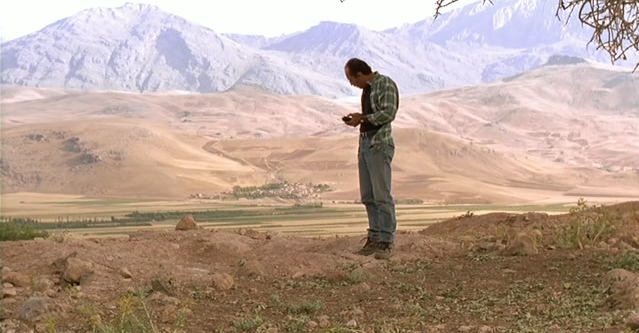
The feature, from the beginning, feels strongly linked to previous exercises by Iranian filmmaker, on the technical side closeness is particularly flagrant with mentioned picture Through the Olive Trees. That opening sequence-shot of the car passing through the winding trails and sandy Iranian paths feels almost like a mirror image of that film, and -always in the technical side- will find many other ever-present technical guidelines in the eastern filmmaker. Thus the imposing and beautiful natural scenery of the director's land will be appreciated, a specialist in shaping the beauty of these places, mobilizing farm animals, its simple people and their customs. Showing his land in this way is nothing new in the cinema of Abbas, but what is striking is how never the framings captured so much visual richness, a chromatic domain that actually generates visual delight. We observe thus, large and clean greens, the sky's deep blue joining the land's abundant ocher, creating a complementary contrast (a quite effective pictorial principle by the way) very beautiful, adding orange tones of certain environments, and even a wheat's beautiful golden ready to be biased in the final segments; the visual display in this regard feels that reached very high levels. As mentioned, it is also a very identifiable film with Iranian on his way to capture what he wants, in such a simple way, so simple, renouncing to complex devices, to ostentatious special effects or deployments, so characteristic trappings of Hollywood or even European cinema; Kiarostami's cinema is offered as a different, very fresh and attractive alternative.


Kiarostami's style still feels identified with his oeuvre on this feature by keeping the guideline of a very close-to-documentary work, which is not too surprising knowing that Iranian does not produce only feature films but also short films and especially not a few documentaries, where the constant director's north shows in his stagings. However, the film does not fully land in that genre, it actually points beyond. The film glides us messages very specific and well-integrated to the development of the picture. A key scene in the film comes to be when the engineer shaves, closer than ever to the viewer, the engineer does not have mirror where to look at, or rather, the mirror where he looks is us, the spectator himself is the one who becomes a protagonist's critic. Kiarostami turns us into his character's critics, egotistical individual who despite his efforts does not ends up curdling in the locality where he is alien, showing not very laudable attitudes. His lack of empathy is evidenced when he unjustly mistreats the small and noble Farzad, then offers flimsy excuses, nothing concrete, to the child, the innocent child who had previouslly expressed how a kind fellow he considered Behzad was; the stranger even mistreats a turtle, in a figure that diagrams how he never understood the nature of the site where he was arriving. Turtle gets up and continues his journey however, life does not stop at human infamy. Hailing from a city full of technology, can not be integrated, does not understand the simplicity and beauty of that place, where he never ceases to be a foreigner.


The engineer is naturally the main thread of the film, because although the visual beauty and the portraits of the land and its people are an important part of the picture, it is through him that befall the main events, his attitudes change. It is seen on the feature also the relative influence of the poem on which it is based to some extent, those verses are recited in significant moment. Among the notable moments of the film we have the figure of Behzad talking underground with the excavator, who he reaches that human femur illustrating the final sequence, and generating the encounter of the engineer with his girlfriend to get milk. It is the moment when the verses are recited, again in the underground, in the dark, with barely visible female milking a cow, in this unique circumstance and place poetry flows in a context apparently so alien to such activity. The symbolic fact of bearing the human femur is also slid, and the final silent shows the engineer getting rid of the bone piece, as if he was deleting something more of that land, setting an admittedly uncertain, but beautiful ending. In the cinema of Kiarostami, an inadequate palate can perceive that "not much happens", in this case may be thought that the film is more of the same stuff by filmmaker, does not add nothing; but beyond that superficial and apparent simplicity and austerity, powerful messages and convictions are warmly enunciated, from that simplicity the film amalgams to the beauty that hides his land, as we perceive some of his beliefs of human nature. It arises from East this singular sort of easterly neorealist, who dispenses actors, which dispenses with special effects and dizzying technical scenarios. His stage, his "trick" is reality itself, that displays solvent and beautifully. The wind will take us is another brick in the construction which is remarkable filmography of Abbas Kiarostami, one of the most attractive filmmakers of today's international film scene.


Taste of Cherry (1997) - Abbas Kiarostami

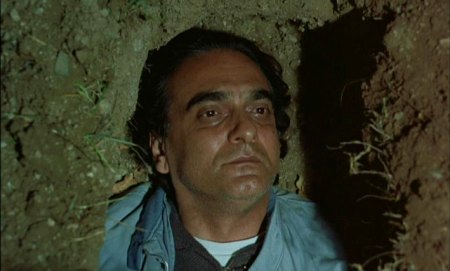
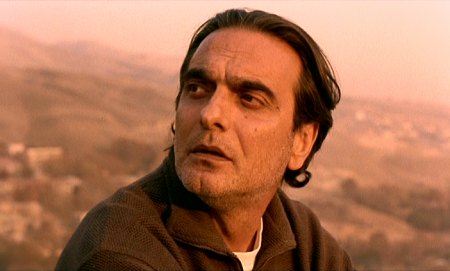
When making this film Abbas Kiarostami was already considered one of the most brilliant filmmakers within the international film context at the end of the century. He had produced one of his major and most recognized works, Through the Olive Trees (1994), which finished catapulting him to the world stardom, and it closed his famous trilogy known as the Trilogy of the earthquake, where he explored and paid tribute to his native Iran and the aftermath of the quake. After that exercise, he made a film segment and a documentary before his next film, the work at hand now. We are facing one of the most memorable works of oriental filmmaker, which is separated from some guidelines of that triad of pictures, to develop some novelties in his art. Kiarostami narrates us in his film the story of a middle-aged man, who reached the point of its existence where has decided to take his life, and for that he must find someone to bury him when he has achieved its purpose, in exchange for much money. In his search the individual will find three different leads, a young soldier, a seminarian, and finally a taxidermist; all three will have different reactions to the request, but the third one will be who have greater influence. A remarkable, beautiful feature, and a great example of the kind of films that makes the director, that continues to consolidate its author as one of the most interesting artists in the panorama of cinema of today.


Tape starts with a character, a man who calls himself Mr. Badii (Homayoun Ershadi), driving a vehicle through Iranian arid lands, without much apparent reason. On his way he meets an individual who collects plastic bags to sell; then picks up a young soldier of Kurdistan (Safar Ali Moradi). After a brief conversation, Mr. Badii says he has decided to commit suicide, and once made his act, needs someone to bury him. After taking him to the grave he has already dug, he  offers the young fellow a lot of money in return, but the soldier escapes finally frightened by the proposal. Mr. Badii does not desist in his purpose, and the next character is a seminarian (Mir Hossein Noori), makes him the same request and offers the same reward, but the religious man expresses his opinion of the sinfulness he considers suicide, and refuses as well to help him. Finally Badii  finds a third man, a mature taxidermist, Mr. Bagheri (Abdolrahman Bagheri), who will hear the same request, and talks about a personal experience, when he attempted suicide by strangling. The tree where he was to hang himself, was a cherry tree, he ended up tasting the fruit, enjoying and taking some to his wife at home; cherries saved his life. Urges him not to suicide, and Badii finally takes a decision after talking to the taxidermist.


Kiarostami again placed his story in his own country, the background of its history is his usual Iran, is a new exercise in which is reflected the eastern Iranian and complex land, Tehran as geographical background, directly or indirectly. The pace of the film is relatively slow, as almost always happens in Kiarostami's films, and accordingly to this purpose, what moves the protagonist, delays in being exposed. During the first twenty minutes of the film we do not know what his purpose is, we see him just talking and doing various questions, both collector bags initially founded, and the young Kurdish soldier. We witness, see a middle-aged man who, without ever exposing during the entire feature reasons, has decided to end his days, it's all we know, and certainly, that's all we need to know for the picture works. The film is a celebration of life, leaving a little aside his usual close and intimate cinematographer portraits of his land and its people -is the more differentiated to temporarily close films to it in this respect-, to show his reflections about life, his outlooks. And in fact life is celebrated, the film is a beautiful allegory to the simplicity and beauty that dwells in the smallest and seemingly insignificant things, the story finally becomes background, it becomes a pretext for most important. The content, reflection approached by the movie is more important than at other times in Abbas, and the visual aspect, although never shelved, share importance and prominence to this aspect.


The camera work is something that does retain usual Kiarostami guidelines, a rather restrained camera without too elaborate shots, the few travellings flow observed when we look at the vehicle traveling, and of course, to also capture Iranian landscapes; Kiarostami continues in that way with his usual pattern of narrative simplicity visually speaking, always outside the eastern to use complex and elaborate tricks or technical resources of Western film industries, more conventional. This camera work contributes to the overall pace of the film, a rhythm, as stated, measured, serene, a simplicity that easily is often confused to slowness. The shots when the potential suicide moves alone show us his point of view, what the protagonist sees, an approach that helps the viewer to enter in history he is witnessing. Also, the proximity the filmmaker looks to generate between observer and protagonist is further reinforced by the side takes focusing Mr. Badii when driving the car also alone, without company. While silence reigns, we almost feel the copilot, we almost felt the companion of suicidality with that frame that makes it seem like you're sitting next to him. Both behavioral characteristics of the camera thus generate narrowness between the viewer and the individual in search of his undertaker, brings us closer to the world and history that Abbas presents. This camera action will always keep as long as the protagonist is in solitude, because that parsimony and silence are automatically broken when a passenger enters, sharing the driver shots with front passenger in turn; it is then that the secrecy of the camera before commented breaks.


The feature is then the parade of the three views that undergoes Mr Badii, with the soldier first, running scared of what is requested. It is plotted the fact that the young Kurdistan soldier, the individual who is trained to kill without hesitation, who deals with death, is the one that most frightened by the bizarre request; perhaps influenced by his age, but is eloquent his desperate escape running through the land, after jumping the car, the, worldly, more innocent reaction of the three. Then there is the Afghan seminarian, representing the religious point of view, a necessary approach, certainly necessary given the nature of the request, the filmmaker presents religious opinion condemning suicide as a sin. The vast majority of religions condemn the act of killing oneself, and religion of the Koran could not be the exception; the seminarian condemns the act, Allah is the origin and destiny of human life; suicide is to kill, kill oneself, but killing at last. Calmly seminarian rejects the request, regardless of the substantial amount of money offered, and suggests Badii to reconsider and rectify his conduct. The third breakthrough is definitely the most important, military and religion have presented its views, it's turn of the most human experience, with the old man who not only speaks and advises, but by sharing his powerful testimony makes the potential suicide reflect, and the viewer himself at once. His moving testimony tells us how to find in the smaller and insignificant things, like some cherries, a source of joy, a source of something that can completely change our outlook on life.


The epiphany of the elderly is the heart of the feature, genuine axis and core of the work, and not in vain is what beautiful and symbolically titled the film, and the figures reinforcing this idea are abundant and remarkable. Cherries are the symbol of life, which made a man about to take his own life reconsider everything; simplicity and insignificance of the fruit returned hope to live, something apparently puerile and unimportant can generate something miraculous, can change everything. When the old man conveys his epiphanic experience, when he talks about how he ate the cherries, we see a sunrise, the sun rises, life comes again; when the old man shares his testimony in what is almost a monologue on his part, oblivious to the previous episodes, something changes (when the soldier and the seminarian raided the film, Iranian ground was symbolically more arid than ever, almost always land, barren land -like the attitude of the protagonist-, and almost nothing of nature, almost no life; in more than one occasion the figure of crows flying over the territory is seen, which fateful omen). When Mr. Bagheri participates noticeable change is observed: the ground remains dry, but the green and plants, trees in rows appear, autumn colors, but also green trees flow, green, life has returned, and even, almost implausibly, a small water fountain as well; no doubt, life comes along with the old man, arrives along with the story of cherries. An image for a few seconds still shows a tree in the center of the frame, until the car moves, as well as the camera. Cherries changed everything, the man went to take his own life, and returned eating fruits, bringing cherries to his wife. The ending is very powerful, a superb example of the type of film that Kiarostami avowedly profess, a cinema that is not complete in itself, which requires audience participation, as evidenced by its denouement, an exquisite and palpable sample of what he means, perhaps the most eloquent one seen from the director. To reinforce this, the filmmaker shows himself and his team filming, an always interesting resource that reminds us that what is shown is a representation, invites us to complete the unfinished and challenging circuit which is always his art. Excellent feature from a filmmaker who produces a highly differentiated and defined cinema, who generates beautiful visual allegories, is Abbas Kiarostami.


martes, 22 de marzo de 2016

Venus in Fur (2013) - Roman Polanski

Last film to date that has produced the once so remarkable and appreciable Polish Roman Polanski, a film that continues sticking to the guidelines showed in his latest works. This time Polanski adapts a work that has multiple origins, having its primal root in the novel written by Austrian Leopold von Sacher-Masoch, sordid work composed in several sections that gives the name to the masochism stream. Later, David Ives would take one of those sections to adapt the novel into a play, and finally this yankee would work with Polanski himself to develop the script of the film. Minimalist film, another one of this kind of exercise from the Polish throughout his career, the picture displays a simple story, the brief episode of a theater director who makes auditions for a new female role, obtaining only deceptions of applicants to the part. Until a singular female appears, resolute and determined to get the role, but in that track, director and actress find themselves in the midst of a peculiar situation, when the part to interpret is extending beyond the fiction and both artists suddenly inadvertently bring the work to plane of real life. New sort of psychological study by Polanski, and new adaptation of a play, like the immediately preceding Carnage (2011), setting a decent, discreet but decent film in what is already eying as the final stretch of the career of this great filmmaker.


A somewhat uncertain music, somewhat dark takes us to the interior of a theater, on a night where we see the director Thomas (Mathieu Amalric), who is having hard times not getting the actress he needs to play the role of Vanda in his new play. Then, arrives late an actress who has the same name (Emmanuelle Seigner), dressed very appropriately to sadomasochistic role she wants to represent. Reluctant at first, Thomas gives in the momentum of Vanda, she displays the audition, and he is shocked to see the strength and naturalness of Vanda to play the role. The lines of the role played are advancing, as well as the admiration of Thomas for his new aspirant, to the level that pays homage, not only artistically. Like the male character of the literary work, the director submits completely to the will of Vanda, although in the play that submission is extended for a year. Various situations will happen, the director shares some events of his personal life, always with her in command and control of what happens, even managing the woman the lighting of the theatrical precinct, being Thomas unable to control the changing roles in the reality. As the director assumes the role of a slave, she dominates more and more, crossdresses him into Vanda, and finally leaves him alone and tied inside the theater.


The bizarreness of the picture is seen from the beginning, with the musical accompaniment that has shades of dark, of bizarre atmospheres, according to the nature and subject of the film, while, with a traveling advance both lens and viewer in the shady night by the street, enters the as well dark theater, we get prepared for the show to witness. The music is rather scarce for the film, appears in dribs and drabs, but appears to generate certain environments, especially in times like successive approaches between director and directed. Aesthetically there will be pleasant surprises, attractive moments: when seeing over a painting, more than one painting, especially at the end of the tape with many historical images by painters such as Botticelli, among others, representing famous females, real and mythological. There are sequences -few, but there are- where we actually appreciate a chromatic domain, a powerful light-and-shadows game that almost seem to have drawn these principles from the paintings, the effect of colors and contrasts, which definitely enhances these sequences, and enriches the aesthetics of the film. So we observe the domineering and unbridled Vanda coming almost out of nowhere, out of darkness, moving toward the light and displaying a colorful costume at the theater, in a nice resource within austerity and economy of resources of the film. Good atmosphere for the environment to create, the environment where reality and fiction line breaks, and where those two only players interact.


We never left that pairing of actors, in this sense, is the most minimalist picture of Polanski, the one which fewer resources needed to be produced, because although is too well known to the connoisseur of the polanskian work his minimalist inclination, his taste to make films with minimal resources, this is the opportunity where that proclivity gets to climax point. Thus, we saw his lineament in Knife in the Water (1962), continuing in Repulsion (1965) and Cul-de-sac (1966), his early films, where two or three characters, even a single character in the case of Repulsion, is responsible for all the action, is the receptacle and simultaneously engine for major events. In turn, in those films everything is triggered in minimal spaces, minimal and low scenarios, and all this feeds powerfully the minimalist style that was always in Polanski films. Then, for three decades he was away from these guidelines, to return lukewarmly to them in appreciable Death and the Maiden (1994); again abandon those guidelines up the feature to the beginning said, Carnage, and stringing the Polish filmmaker, decades later, two films of this nature in a row. But, as stated, this feature carries those two directives to the peak, when the duo of performers are the only human elements that we see, and when the small theater venue is the only scenario seen during the ninety minutes of footage. Polanski maximizes some of his most important guidelines, certainly returns to its beginnings while still taking refuge in the theater (Carnage is also a theater piece).


In that sense, the director, when adaptating theater to cinema, two art so close, renounces the showiest artifices of seventh art, austerity of resources is also reflected in that plane. But obviously, an adaptation thus combines the virtues of both theater and cinema, with the wonders that can be done in montage and with a good shots work (which Polanski certainly gets), and we will see some expressive framings, empowering at times the female for her location in the shots; light low-angle shootings, shots and reverse shots, and other framings again attest to this. It is curious that Polanski, without being a theater man, in a moment that is expected as the closing stage of his career, performs this kind of exercise, and do it with quality. Polanski continues turning to his wife, his wife Emmanuelle Seigner, who frankly could have some excess of years for this film; she still retains much of its solvency and her antecedents in the sordid films by her husband (Frantic 1988, obviously the remembered Bitter Moon 1992, and regrettable The Ninth Gate 1999) were the main arguments for, fourteen years later, starring in a tape of the Polish again. That said, the Seigner retains many of her virtues, but has lost freshness over the years, and although his performance does not clash or disappoints, maybe a younger actress could have performed the same or better job. Mathieu Amalric complete the reduced acting cast, and he feels achiever in his double-faced and almost always subjected role.


The character of theater director is eying almost as an extension of filmmaker Roman himself, who probably felt affinities between himself and the flamboyant theater director who is completely subjected to the will of the fiery female who directs his work. Sadomasochism from literary novel goes portraying from Vanda's provocative and daring clothing, getting at some point in lower garments, and becoming the dominator of everything. In that sense, the psychological game is portrayed, the work of von Sacher-Masoch, of course, is full of sordidness -not in vain sadomasochism was named after the author because of this novel-, dark and bizarre issues, it moves to film, the director has a traumatic experience with a whipping aunt, and he acquired a taste for it. The psychological game is severe, the exchange of roles is absolute, starting with her managing the theater lights, then fiction gets beyond its scope and moves to reality: she assumes the role of psychiatrist and he is placed on the couch, the figures and theatricality deployed reinforce powerfully that tense psychological atmosphere. Gradually their roles are exchanged and that is also reinforced by the correct camera work mentioned, it is pretty clear who's boss and who obeys. If it was already outlined a psychological study in Carnage, with parents losing control, with this film indeed new heights are reached. The tape is nice, can fool its apparent discretion, but is powerful at some times, I like the idea of making theater from cinema, that game between the two arts that makes the filmmaker. However, it feels like a feature already in the old age of its director, psychology becomes important and strength, other aspects of his films seem to be decreasing already since decades. Not having an upcoming project confirmed by Polanski, is this his last production available, noticeable, pleasant, perhaps not the best of its creator, but enjoyable.