
In the first decades of the twentieth century, all the countries of the world involved in cinematography were amending their styles, assimilating the novelties of the medium, without doubt being the most revolutionary, the sound. But before that, the cinemas of the dawn were emerging in each nation, and in the case of Italian cinema, the cinema of the extraordinary epic productions was in its heyday, the so-called Italian realism is what was known to the whole world as the maximum production, audiovisually speaking, of the Latin lands. Based on the writings of Titus Livy, the Italian Giovanni Pastrone takes to the big screen this huge story, in which he also recruits the celebrity of Italian letters, the famous Gabriele D'Annunzio, to elaborate the inter titles. The filmmaker tells us the story of Cabiria, a girl who gives the title to the film, who in times of the Punic wars, is separated from her family in Rome by pirates, sold in Carthage, but, when she is going to be sacrificed to the god Moloch, is rescued by a nobleman and his strong slave; years pass, the girl has grown already, but her rescuers will have more than one problem to be able to return to Carthage. One of the largest and most renowned productions of Italian classic cinema, jewel of silent films, a masterpiece inspiring of other masterpieces.


First chapter, in Rome, the small Cabiria (Carolina Catena), is attended by her nurse, Croessa (Gina Marangoni); When the Etna erupts, some pirates kidnap her, the locals believe her dead. Second chapter, in Carthage, Cabiria and Croessa are bought as slaves by the high priest Karthalo (Dante Testa), will sacrifice them to the bronze god. Meanwhile, Fulvio 'Fulvius' Axilla (Umberto Mozzato) and his giant slave Maciste (Bartolomeo Pagano) have arrived clandestinely at Carthage, staying in an inn, they are able to rescue the girl from death. Third chapter, Hannibal (Emilio Vardannes) is crossing the sacred mountains, Fulvio and Maciste protect Cabiria; the beautiful Sophonisba (Italia Admiral-Manzini) is courted by the numidic king Massinissa (Vitale Di Stefano); Cabiria, already grown (Lidia Quaranta), is wanted to sacrifice her, they capture Maciste. Fourth chapter, Carthage is besieged, Hannibal is in danger, but they resist in a great way, they destroy the Roman fleet, Fulvio survives. Fifth chapter, Massinissa has lost her kingdom, Sophonisba must marry thinking of protecting Carthage; Fulvio enters Carthage again, Maciste escapes, together they advance, Sophonisba fears the gods for fleeing Cabiria, whom they believe another slave. Finally Cabiria escapes death, Sophonisba surrenders in sacrifice, Carthage falls before Rome.


In this immortal film the lost days of Roman glory are reflected, the empire was something irresistible for the whole globe, a suitable topic to praise his nation, the filmmakers of that time chose, and Pastrone feels one of the great cornerstones of this cinema, the epic cinema, great solemnity is observed from its first images. In these moments of embryonic development of audiovisual language, the camera is still mostly static, not even talk about speed in their movements, because the camera is static in the first instants, to finally acquire dynamism and a certain independence. Thus some travellings that still showed with timidity arise, an important part of the audiovisual language was born, of the cinematographic language, the liberation of the camera was initiated. And it is that the audiovisual language would be evolving -even today it still is like that- largely hand in hand with the liberation of the camera, its independence, and we have in this remarkable film the first steps in that process of visual expressive independence, with the camera traveling scenarios with tricliniums and clamids. Those were the first steps of the travellings, they were not yet elements, narrative, expressive resources, as much as, according to the director, resources to show all the great scenery; yes, a new audiovisual language was born. In Pastrone's film we will also find great sequences, great representations, thus we have the initial eruption of the Etna, one of the great visual achievements of the film, especially for the time, a well-achieved sequence in which the great Segundo de Chomón, with the unforgettable and egregious trucages of the powerful volcano unleashing fury, visual contraptions with the camera that would set the foundations of all the subsequent cinematographic movements. Among other sequences, of course, we have naval combats, maritime battles and the complexity that, above all, must have entailed, but the sequences, as brief and spectacular as they are, are among the most successful of the film. Likewise, the crossings through the Alps, the raids through the desert, are also proof of the mastery of the shooting, certainly complex sequences for the cinematography of that time, and all of them, combined with those previously mentioned, increase that epic aspect of the film.


It is notable that the feature film has a soundtrack, which certainly helps us to get better into the different sequences, and their different themes or expressive tones. Of course, we will find great sets, many humans, numerous extras, as human props, mega productions, epic productions were already defining their edges, large budgets designed to represent the grandeur of their ancestors. The composition of the images, of the frames, with the numerous humans that overflow the visual range, overflow the frames, and with that visual overflow they dynamize the images, plague of action what is observed, this is a pictorial principle that, transferred to the audiovisual field it just reinforces that feeling of dynamism. Highlight also the images of the temples, splendid and grandiose, the temple of Moloch, god of bronze, is particularly great example of the sumptuousness of this cinema, of the spectacular pageantry in its staging, in which at times humans are reduced to secondary elements of the scene. The scenarios and sets, an unparalleled pomp, unparalleled in representation in any other cinematographic genre, definitely the Italians sat school with their realism. It was their moment, it was their biggest production in the seventh art, immortal classics of the silent cinema saw the light, like
La caduta di Troia (1911), by Luigi Romano Borgnetto and Pastrone himself, in which he also works as a screenwriter,
Quo Vadis (1913) by Enrico Guazzoni, were the italian films the ones setting the trend. This sweeping epic is created in large part thanks to Segundo de Chomón, the mythical Aragonese, a grandiosity of film before which David W. Griffith himself was startled, overwhelmed, breathed in by an artistic alienation that led him to materialize on his part another ineluctable work of the cinema,
Intolerance (1916). No resources were spared, human and economic, this is undoubtedly a milestone in italian cinema, and like Griffith, other masters, then find ways to direct their particular adventures in this type of cinema. The colossal stages, complemented by imposing details in papier-mâché, the hundreds of extras, the tricks and innovations in the audiovisual language, is a summit of italian cinema; before neorealism, there was an italian realism.


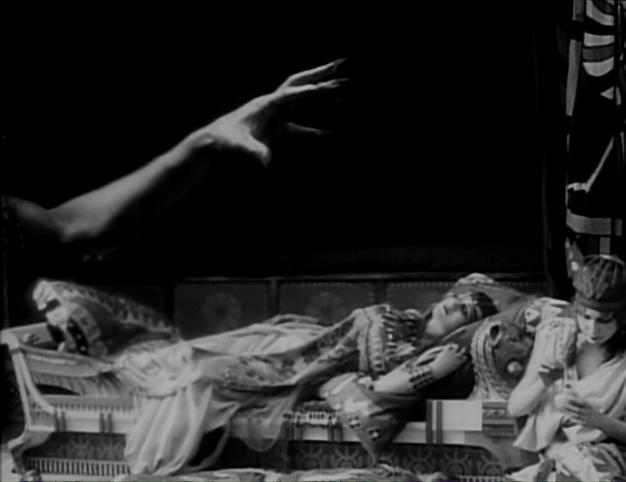
This film is one of the first relevant cinematographic treatises on lighting, with Chomón always very involved in these successes, it is increasing the importance given to this resource in a film, the powerful chiaroscuro in the desert and in Roman interiors and Carthaginians, they are flowing and developing valuable techniques, details that with the running of the quinquennials will be the basis of modern cinematographic languages. It is thus configured a type of language that could not be exempt from exoticism, details that enrich the representations, such as the leopard mascot with which Sophonisbe plays, the genre became completely fashionable, adapting great epic themes, brilliant historical moments and magnificent past opulence, the epic cinema had already been born, and was now consolidating. This film, as was usual then, suffered different cuts and footage, but what was unusual is the amount of these variations, with many restorations in recent decades, in each case generating respective versions of this feature film, which have circulated over the years. Another detail that enriches the film are the textual scope, the inter titles, whose inclusion, D'Annunzio's work, some foolish criticized, considering their inter titles as something not indispensable and that was detrimental to the silent work, but in reality, certainly positive these elements, they also attest to the ambition of the film, to be a work of five stars, in all aspects, the inclusion of this referential and multifaceted classic italian man does nothing but reinforce the intentions of the producers of the film. Before finishing, I think it is pertinent and necessary to point out another one of the most successful sequences, it is, in fact, one of the only two sequences in which the narrative linearity is broken, the conventional nature, in space, and flat, in time, of portrayed, this scene is the dream of Sophonisba. The then novel overlays of planes are responsible for engendering that oneiric atmosphere, that sensation of surreal atmosphere, three eyes that appear and disappear, a great hand that extends almost touching Sophonisba in the chest, she who is in the jaws of the creature of three eyes, the terror that she feels before the imminent and unsatisfied fury of the gods, because the necessary human sacrifice of Cabiria has not been carried out; short sequence, but very significant, and also enrich the enormous versatility of a film that, for details like this, is in the Olympus of silent movies. Also, again at the end we see a sequence of the same trend, after the Roman triumph over Carthage, we see Fulvio and Cabiria together, in that closing sequence we observe again the superposition of frames, another proof of versatility, the souls sacrificed in the war flows and they parade surreally around our protagonists, but Rome has won, the fates have favored it, Carthage falls, Rome, heart of the empire, regains its honor, Cabiria, the symbol in the film of that honor, cleans the affront. Certainly a major film, what is called a seamless film, it does not matter that a certain anachronism is noticed in the film, when time passes for Cabiria, being her benefactors, Fulvio and Macisto, apparently hermetic over time. Essential feature film, silent film classic, the first Italian realism, italian epic cinema, a reference for film posterity.



 The great German Paul Leni, tragically and prematurely disappeared at the height of his film production, formed a group of illustrious filmmakers, egregious representatives of immortal german expressionism, one of the most relevant movements in the world of cinema. Many place this great director at the height of the huge titans of the same artistic movement, be it the great Fritz Lang or Friedrich Wilhelm Plumpe, Murnau, and the truth is that in this feature he paints many of the reasons why he has such high consideration. For the present film, the filmmaker is based on a successful play by John Willard, in which adapted the work Robert F. Hill, it is the dark but at the same time hilarious story of a wealthy individual, that when dying, he must leave in his inheritance his numerous goods, and when disappearing, leaves in his testament that his will must be read up to 20 years after his death; after that time, the beneficiary is an innocent girl, but it is stipulated that her mental health must be proven, so that the other relatives, ambitious, will torment her with various situations that haunt something disturbingly paranormal. An immortal film, a cinematographic treatise in which the use of lights and shadows, the use of the camera, and more resources, make it an inescapable film.


 It is a referential film for the genre, the cinema of terror began to define its edges, many european filmmakers, of german descent on many occasions, they would take their talent to American lands, their aesthetics, their themes, their audiovisual stamps, would be exported that way to Yankee studios and industries. And this is immediately evident in the film, because the director does not expect anything to show the versatility of resources that his film keeps to us, with those superpositions of frames -still new resources then, in the years in which this feature was filmed-, and thus we see the numerous superimposed figures, numerous cats and bottles, surrounding the human prey of physical tribulations, and the note written on paper; all these images merge into a single dynamic frame, forming a sequence that was an indivisible part of the expressionist language, and that would become indispensable in the cinema since then. There will be more than one superposition of shots by the way, and always, although it is obvious to point out, without words, it is silent cinema, it is the intrigue and terror of the old school, it is generated in the style of the old school. Adding to that same line, another old resource, very valid and always desired by different filmmakers, is the nightmarish resource, of dreamlike dementia, the deformation of the frames to represent that tense madness, for example we have the moments of the reading of the testament, it is fascinating to see the first uses of audiovisual resources that would later be the basis of modern cinematic languages. The first part of the film, around the first half hour, which is posing the whole situation, is undoubtedly the most successful, splendid in its variety of resources exhibited, in the strength of its images, more versatile, and more daring in its proposal; is the epitome of this range of surprisingly large resources, which will then be repeated sporadically in the rest of the footage. Also always in that first half hour, the camera has its most remarkable performance, with more vigorous movements, some travellings that, evidencing being the cinema as art still in its formative years, make up a skill and a fast coordination according to the full force of the Expressionism in one of its greatest representatives; those instants are certainly the most expressionist of the film, the instants that bear more powerful and determinedly the imprints of the immortal germanic current.


 One of the greatest watchwords of expressionism is manifested with vigor in the same way, the shadows, which are scattered, which begin to move almost by themselves, are almost one more character, and, at times, they are completely, they acquire independence; those shadows already become primordial expressive element, which could fill a frame, could star in a sequence, by themselves. The shadows, offshoots of darkness, become elements of a terror that reaches everything and everyone, Annabelle is terrorized as the path to the longed-for inheritance muddies, and little by little is plunged into the shadows, absolute for moments in some frames. In this film, one feels the basis of the expressionist current, the characteristic gloomy visual expression, with the presence of constant chiaroscuros, an eternal tool of the current, scattered light and shadow, the few illuminated spaces, many times they are, but mostly shaded with an oily yellow, worn, which in some way increases the morbidity of the scenarios portrayed. Manipulates in this way the director, not only the shadows, but also even the light, the lighting to generate certain perspectives of the characters, the beams of light will then be molded to those intentions. In that sense, and always in the first half hour, the most enriched, the camera and the light merge in a single resource, good resource by the way, both elements advance, the focus and tension increase, because darkness governs everything, except for that light that advances according to the protagonist. A unique chromaticism is used, there are different color tonalities with which different sequences of the film have been dyed, generating this circumstance that there are even versions, cuts of the film that differ in that illumination, in the different colors with which different sequences are set, having a version in which the original coloration of the film has been respected. In that version, the chromatic tones in the sequences seem well adapted to the respective moment, the sepia tones predominate, the blue or colder tones for sequences of exteriors and the sepia or tones somewhat more morbid for the interiors. Watch out, thus, with the different versions that circulate, because the altered version has absolutely black and white tones, there are no more colors, and with that reduction in the tones, from one version to another, the loss of color is undeniably a handicap.


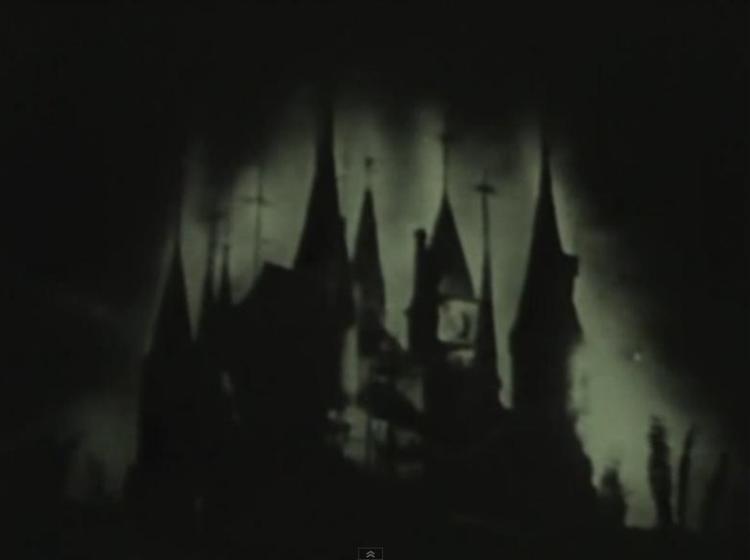


 The film is an expressionist jewel, many bases or audiovisual foundations of this current would sit, along with other jewels like The Cabinet of Dr. Caligari (1920) by Robert Wiene, or Metropolis (1927) by Fritz Lang, reference films. Thus, with a very characteristic aesthetic, in the film, with those broad and lonely corridors, the shadows have a freeway, symmetrically spilled, a sinister and gloomy atmosphere, with the shade that manifests itself even in makeup, one of the pioneers is the film to lay foundations that would be characteristic for filmmakers and later horror films. But not only audiovisually, but at the level of characters, we have the figure that other masters would later use, the mysterious, lonely and shady housekeeper, which other directors would later adopt, as an example, Hitchcock with Judith Anderson as Mrs. Danvers in Rebecca (1940), and most likely the reader can also think of a simile for example. There is also the figure of the terrifying hand, that great hand that persecutes the tormented victims, especially Annabelle, precedent of horror films of medium caliber -like The beast with five fingers (1946) of Robert Florey, with the famous Peter Lorre-, something that would become a classic horror film that would later adopt other film industries, such as Hollywood, of course, one of those iconic images of cinema that over the years will have countless remakes, tributes, allegories, etc. History certainly has elements that make it a good example of theatrical art, that is, a single location, the gloomy residence -all in one environment, the tenebrous house is the universe-, few characters, however, we see it now adapted remarkably to the movies. The scenic treatment is therefore remarkable, differentiating itself from the original theater from which the story comes, the location of the camera in certain scenes outdoors, with a slight low-angle shot, will generate a warm suspense, tension, while endowing the scenes of that personality characteristic of expressionism, capturing not only the human being, but also its exteriors, always stylized those exteriors with the elements that feed this current, often gothic elements. The filmmaker demarcates off the theatricality in his treatment, there is dynamism in his editing, there are different perspectives of the characters, a change of sequences and rhythm that bring adaptation much closer to a cinematographic exercise, as well as a music that at times helps to that hilarious tonality that the film has, with a certain aura of comedy. In this way, there are slight details of comedy, slight comic nuances, light and not abundant, it is true, but present to give that final nature to the film; as an example of that humor, of warm eroticism, we have Paul, who sees the girls changing their clothes, from under the bed he covers his eyes with his hands, to open immediately the fingers and between seeing the show. Also, it became fashionable thanks to this film the traditional form of cinema, the thriller of terror, with fantastic dyes, which finally end up having rational explanation, ending with all paranormal or supernatural speculation. The film is a great compendium of expressionism, referential film of a filmmaker who unfortunately we could not get to appreciate how far his development or artistic evolution would have end, is the genius who left us prematurely for a blood disease, whose work is put by some specialists to the height of the greatest ones, Murnau or Lang. A necessary film, the legendary silent film was coming to its twilight, the sound was a novelty of imminent arrival, and this work is one of the most remarkable silent exercises of those late years.


