When we talk about german expressionism, almost reflecting the mind of one, there are usually illustrious names, conspicuous men of audiovisual art, almost without comparison in the world of cinema, such as Lang, Murnau, Wiene even. But if there is a name that in the judgment of not a few, can be up to those major names, that is Paul Leni, that unforgettable german director whose career, abruptly stopped at its best, is one of the most regrettable losses of the seventh art. In his brief -but not for that lesser or less brilliant- filmography, he had a rapid evolution in his performance as a filmmaker, and although in this film he still does not reach the peak that would come immediately afterwards -for this great cinema man, after the present film, would only direct four more feature films-, we can find a variety in the cinematographic records of the director, as well as an extraordinary acting contribution. The story is that of a young writer, who is hired by the owner of a museum of wax figures to create stories about his sculptures, thus being born tales about an old Caliph, Ivan the Terrible and Jack the Ripper. The film revolves around these three stories without any connection or common bond, but the versatility of one of the greatest masters of the cinema in the solemn and distant silent era remains in it.


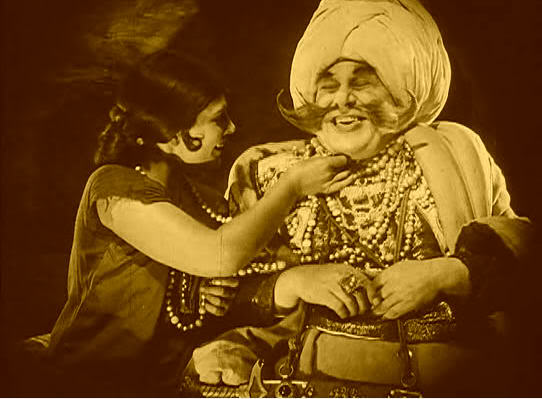
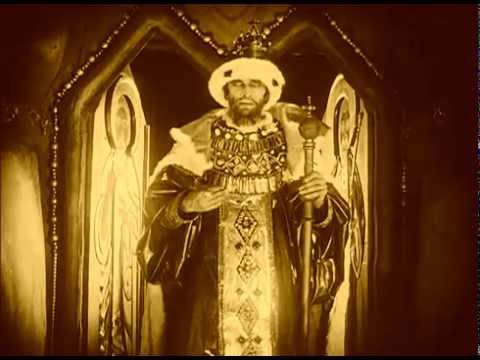
In one night, we see a young man (William Dieterle) in an amusement park, he sees a job announcement, the services of a writer, like him, are required. Soon he is at a wax museum, meets the owner and his daughter, he is asked to write a history for each wax figure of the museum. The poet begins his work, starting with a statue of a Caliph, it is Harun al Raschid (Emil Jannings), famous and romantic Caliph of Baghdad, he entertains playing chess with his Vizier, but the smoke of the local baker, Assad (Dieterle also), irritates him; he orders the Vizier to kill him, but he captivates with the baker's wife, he speaks to the Caliph about her. The Caliph visits her, admires her too, tries to seduce her. For his part, the baker tries to steal a valuable and magical ring from the Caliph, from his own hand, he believes he killed him, but it was a statue; upon returning home, she manages to get the ruler to escape. Finally the Caliph reappears, celebrating the fact that the baker and his wife are staying together. The poet's second story is that of Ivan the Terrible (Conrad Veidt), bloodthirsty and tormentor, feared by his people, he generates torments and potions thanks to his poison mixer. A nobleman visits the Tsar, who kidnaps his wife. The Tsar is deceived, believes he is poisoned and close to death, and so he spends his last days. In the end, the poet has a nightmare with the third figure, that of Jack the Ripper (Werner Krauss).


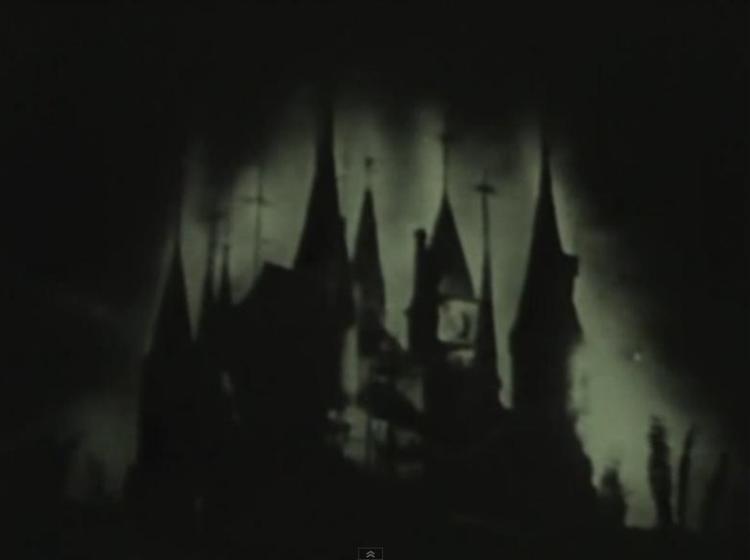
Leni ends his picture like this, we could call this his last work before reaching his peak, and produce what would be considered the best films of his production, so in this film details will be appreciated in which the filmmaker has not yet fully exploited his skill, but the moment was already imminent, the precocious artist was already at the gates of his greatest stage. Speaking of the film properly, first of all you immediately appreciate a narrative economy, necessary economy by the way, we see the character that links everything, the poet, in a kind of fair, and suddenly, in a matter of a few minutes, seconds we could even say, after a few more frames, he is already in the house of the owner of the wax museum, talking with him and his daughter. It is in this way, with that resource, and at the same time skillful excuse, that there are stories for three figures of wax without major link or relationship between them, thus the director manages to gather the three dissimilar stories, without common bond, without even feeling fully developed or even solid, and this is one of the mentioned shortcomings of the film. We appreciate then without delay that long and first story, in which the personality of the main character, the Caliph, permeates all that segment, with his good-natured, playful, slightly lustful tone, a comical tone that reaches delirium in the sequence in which the baker, Assad, persecutes whom he considers has just committed illicit acts with his adulterous wife, without a doubt the most comic sequence of the whole film, where the great Emil Jannings enjoys himself in the exotic comedy. Soon also the dark aesthetic of the film is reflected, we see powerful darkness, a darkness that at times plagues everything, except the characters, completely surrounded by that shade, an overwhelming gloom that for some seconds generates an atmosphere of asphyxiating murkiness, hermetic dementia. Also in this, the first and most extensive segment of the three presented, we see that aforementioned dark aesthetic, combined with rounded figures, in obvious and hilarious allusion to the figure of the round Jannings, but also some buildings, as well as other objects and structures of smaller size, but that will also have that geometric orientation, generating positive visual homogeneity.



A simile aesthetic continues in the second section, and without the exoticism of the Far East, of the first story, it is certainly a story that does not overflow with expressionism, and it is even curious that, being starred by Conrad Veidt, a major acting icon within of the Expressionist universe, this segment is undoubtedly the one that less overflows with that aesthetics, the one that lacks the most from expressionist identity. This second story is set in a dark staging, it is true, of course the engendered atmosphere is gloomy, it is about following the same line of the Caliph's story, but lacks the exuberance of that context, there is greater austerity in the expressive means used in this second chapter. After appreciating the three stories of which the film is composed, we can affirm that, as mentioned before, without a doubt, it is the least expressionist of the three stories, it is the one that contains with less intensity all the cornerstones of the current. A common detail to the first two stories -the only ones that count in a certain way with a plot, at least understood in a conventional way, because the third is almost a delirioum- is that there is an exchange of characters, exchange of roles, a confusion in the humanities of the protagonists, first with the Caliph, who leaves an inert substitute in his bed every time he leaves his palace, deceiving Assad; then, something similar with Ivan, who changes roles with one of his servers, making everyone not notice the change. After having consumed the previous segments almost all the final footage, the third segment has only five minutes, and incredibly, those five minutes are enough and end up being more than sufficient to consolidate as the most interesting and challenging of the three stories, truly a prodigious show of effectiveness achieved in a segment as brief as dazzling. The third segment is born of a nightmare, and all the almost infinite freedom that gives a context of this nature is taken advantage of eloquently, in a way that shows that behind the cameras was someone who knew how to develop with incomparable freedom in such scenario, an authentic master of expressionism gives samples of office. The maximum visual wildness of the film is achieved in that brief history that closes everything, it is by far the most expressionist segment, it is the shortest story, but visually the most convincing and powerful, all the visual resources, the technical tricks, come together copiously, with a fast-paced rhytm, that overwhelms, the shots overlays, the unmissable twisted lines, the deformed figures, the nightmarish environment, the insanity, the madness and the terror multiply, a terror that approaches him and the girl, because obviously an attraction has been born between them, in the midst of a visual power that is unparalleled in the rest of the film.

In that third and final segment that great freedom is certainly taken advantage of, that independence that gives the dreamlike atmosphere, few to stand out like Leni in that section, there are no major excuses necessary, a solid plot is not necessary -deficiencies by which the first two segments at times drown, by the way-, the horror just approaches, Krauss, Jack the Ripper, in an almost intangible way, ineffable, but overwhelming, irrecusable, imminent and aberrant threat. During the three stories, the scenographies of the great artist who was Paul Leni will copiously parade, designer of many of those oniric scenographies, some of them with the characteristic deformed lines, a watchword of expressionism. It results from this an overwhelming darkness in some sequences, also that aforementioned aesthetics, both will vary in their registers, at times manifesting themselves warmly, by others with a marked expressionist accent, the visual tessituras will be graduating until reaching the climactic outcome. As for the camera and the assembly, something interesting happens, because the behavior of the camera is static, completely lacking movements in its development, however in the assembly a marked dynamism is achieved, the approaches, the general and middle shots, they vary and intersperse, in an exemplary demonstration of how to generate dynamism, even in spite of a camera lacking in movement, and remedy that lack with an assembly of appropriate rhythm, and of course, the correct frames. It was about to explode the wide and varied technical freedom that the director would later achieve, in the immediately following
The Cat and the Canary (1927), in which we appreciate a radical change in the handling of his camera, his travellings and all the language and the force that gives off a completely different, more vigorous performance. The film also rests in a cast that shines in a manner rarely seen before, starting, in the order of the film, with Emil Jannings, a major figure in international cinema, who would star in
The Last Laugh (1924), or
Faust (1926), both by the giant F. W. Murnau, and who years later would continue to achieve immortality with works such as
The Blue Angel (1930) by Josef von Sternberg; a true titan of cinema, paving the way for two icons of expressionism. Jannings before, Conrad Veidt later, taking the witness as Ivan the Terrible, unfolds all the madness, dementia in his performance, with all the burden and inevitable characterization of Cesare in
The Cabinet of Dr. Caligari (1920), we have the legendary Cesare, the indelible walking zombie of the aberrant doctor, we have the human synthesis of a whole aesthetic idea, of a whole artistic current. And to close, ephemerally, Werner Krauss, who comes to close that trio of formidable actors, of imperishable figures, is the very Dr. Caligari, are major glories in the silent solemn film. The movie is thus imbued with capitalized figures, which adorn a feature that elevates its worth. As I say, certain fissures are observed however, definitely as for example in the first part, with that story that does not feel quite well curdled, that weak ending, a confusion that is not clarified in a more convincing way, where Emil Jannings rejoices in his histrionics, and where he gives a new sample of his versatility, his wide range of acting tessituras. Leni thus configures his feature film, the expressionist genius that made his own sets, the painter and set designer, his is all the visual force of the film, a force that was yet to reach its climax, a visual force that joins the extraordinary contribution of the actors, giants the main ones, and the references on which the director is based, that turn this film into what it is, a classic silent film. Obvious influences Leni has of his comrades, of the names that will always shine with greater intensity than his, because things came out that way, the disease snatched him at his best and deprived us of the many masterpieces that for sure he would have produced years later. Thus we will notice obvious halos of
Caligari, and many are eager to see halos of
Destiny (1921), by Fritz Lang, although there are three episodes included in this film, as in that one, the truth is that initially it was planned to be four, but the final story did not get to be shot. It is a huge film, a providential director for the study and understanding of what was german expressionism, a five-stars director, the great Paul Leni, surrounded by actors of the highest level.
 When we talk about german expressionism, almost reflecting the mind of one, there are usually illustrious names, conspicuous men of audiovisual art, almost without comparison in the world of cinema, such as Lang, Murnau, Wiene even. But if there is a name that in the judgment of not a few, can be up to those major names, that is Paul Leni, that unforgettable german director whose career, abruptly stopped at its best, is one of the most regrettable losses of the seventh art. In his brief -but not for that lesser or less brilliant- filmography, he had a rapid evolution in his performance as a filmmaker, and although in this film he still does not reach the peak that would come immediately afterwards -for this great cinema man, after the present film, would only direct four more feature films-, we can find a variety in the cinematographic records of the director, as well as an extraordinary acting contribution. The story is that of a young writer, who is hired by the owner of a museum of wax figures to create stories about his sculptures, thus being born tales about an old Caliph, Ivan the Terrible and Jack the Ripper. The film revolves around these three stories without any connection or common bond, but the versatility of one of the greatest masters of the cinema in the solemn and distant silent era remains in it.


 Leni ends his picture like this, we could call this his last work before reaching his peak, and produce what would be considered the best films of his production, so in this film details will be appreciated in which the filmmaker has not yet fully exploited his skill, but the moment was already imminent, the precocious artist was already at the gates of his greatest stage. Speaking of the film properly, first of all you immediately appreciate a narrative economy, necessary economy by the way, we see the character that links everything, the poet, in a kind of fair, and suddenly, in a matter of a few minutes, seconds we could even say, after a few more frames, he is already in the house of the owner of the wax museum, talking with him and his daughter. It is in this way, with that resource, and at the same time skillful excuse, that there are stories for three figures of wax without major link or relationship between them, thus the director manages to gather the three dissimilar stories, without common bond, without even feeling fully developed or even solid, and this is one of the mentioned shortcomings of the film. We appreciate then without delay that long and first story, in which the personality of the main character, the Caliph, permeates all that segment, with his good-natured, playful, slightly lustful tone, a comical tone that reaches delirium in the sequence in which the baker, Assad, persecutes whom he considers has just committed illicit acts with his adulterous wife, without a doubt the most comic sequence of the whole film, where the great Emil Jannings enjoys himself in the exotic comedy. Soon also the dark aesthetic of the film is reflected, we see powerful darkness, a darkness that at times plagues everything, except the characters, completely surrounded by that shade, an overwhelming gloom that for some seconds generates an atmosphere of asphyxiating murkiness, hermetic dementia. Also in this, the first and most extensive segment of the three presented, we see that aforementioned dark aesthetic, combined with rounded figures, in obvious and hilarious allusion to the figure of the round Jannings, but also some buildings, as well as other objects and structures of smaller size, but that will also have that geometric orientation, generating positive visual homogeneity.


 A simile aesthetic continues in the second section, and without the exoticism of the Far East, of the first story, it is certainly a story that does not overflow with expressionism, and it is even curious that, being starred by Conrad Veidt, a major acting icon within of the Expressionist universe, this segment is undoubtedly the one that less overflows with that aesthetics, the one that lacks the most from expressionist identity. This second story is set in a dark staging, it is true, of course the engendered atmosphere is gloomy, it is about following the same line of the Caliph's story, but lacks the exuberance of that context, there is greater austerity in the expressive means used in this second chapter. After appreciating the three stories of which the film is composed, we can affirm that, as mentioned before, without a doubt, it is the least expressionist of the three stories, it is the one that contains with less intensity all the cornerstones of the current. A common detail to the first two stories -the only ones that count in a certain way with a plot, at least understood in a conventional way, because the third is almost a delirioum- is that there is an exchange of characters, exchange of roles, a confusion in the humanities of the protagonists, first with the Caliph, who leaves an inert substitute in his bed every time he leaves his palace, deceiving Assad; then, something similar with Ivan, who changes roles with one of his servers, making everyone not notice the change. After having consumed the previous segments almost all the final footage, the third segment has only five minutes, and incredibly, those five minutes are enough and end up being more than sufficient to consolidate as the most interesting and challenging of the three stories, truly a prodigious show of effectiveness achieved in a segment as brief as dazzling. The third segment is born of a nightmare, and all the almost infinite freedom that gives a context of this nature is taken advantage of eloquently, in a way that shows that behind the cameras was someone who knew how to develop with incomparable freedom in such scenario, an authentic master of expressionism gives samples of office. The maximum visual wildness of the film is achieved in that brief history that closes everything, it is by far the most expressionist segment, it is the shortest story, but visually the most convincing and powerful, all the visual resources, the technical tricks, come together copiously, with a fast-paced rhytm, that overwhelms, the shots overlays, the unmissable twisted lines, the deformed figures, the nightmarish environment, the insanity, the madness and the terror multiply, a terror that approaches him and the girl, because obviously an attraction has been born between them, in the midst of a visual power that is unparalleled in the rest of the film.


 In that third and final segment that great freedom is certainly taken advantage of, that independence that gives the dreamlike atmosphere, few to stand out like Leni in that section, there are no major excuses necessary, a solid plot is not necessary -deficiencies by which the first two segments at times drown, by the way-, the horror just approaches, Krauss, Jack the Ripper, in an almost intangible way, ineffable, but overwhelming, irrecusable, imminent and aberrant threat. During the three stories, the scenographies of the great artist who was Paul Leni will copiously parade, designer of many of those oniric scenographies, some of them with the characteristic deformed lines, a watchword of expressionism. It results from this an overwhelming darkness in some sequences, also that aforementioned aesthetics, both will vary in their registers, at times manifesting themselves warmly, by others with a marked expressionist accent, the visual tessituras will be graduating until reaching the climactic outcome. As for the camera and the assembly, something interesting happens, because the behavior of the camera is static, completely lacking movements in its development, however in the assembly a marked dynamism is achieved, the approaches, the general and middle shots, they vary and intersperse, in an exemplary demonstration of how to generate dynamism, even in spite of a camera lacking in movement, and remedy that lack with an assembly of appropriate rhythm, and of course, the correct frames. It was about to explode the wide and varied technical freedom that the director would later achieve, in the immediately following The Cat and the Canary (1927), in which we appreciate a radical change in the handling of his camera, his travellings and all the language and the force that gives off a completely different, more vigorous performance. The film also rests in a cast that shines in a manner rarely seen before, starting, in the order of the film, with Emil Jannings, a major figure in international cinema, who would star in The Last Laugh (1924), or Faust (1926), both by the giant F. W. Murnau, and who years later would continue to achieve immortality with works such as The Blue Angel (1930) by Josef von Sternberg; a true titan of cinema, paving the way for two icons of expressionism. Jannings before, Conrad Veidt later, taking the witness as Ivan the Terrible, unfolds all the madness, dementia in his performance, with all the burden and inevitable characterization of Cesare in The Cabinet of Dr. Caligari (1920), we have the legendary Cesare, the indelible walking zombie of the aberrant doctor, we have the human synthesis of a whole aesthetic idea, of a whole artistic current. And to close, ephemerally, Werner Krauss, who comes to close that trio of formidable actors, of imperishable figures, is the very Dr. Caligari, are major glories in the silent solemn film. The movie is thus imbued with capitalized figures, which adorn a feature that elevates its worth. As I say, certain fissures are observed however, definitely as for example in the first part, with that story that does not feel quite well curdled, that weak ending, a confusion that is not clarified in a more convincing way, where Emil Jannings rejoices in his histrionics, and where he gives a new sample of his versatility, his wide range of acting tessituras. Leni thus configures his feature film, the expressionist genius that made his own sets, the painter and set designer, his is all the visual force of the film, a force that was yet to reach its climax, a visual force that joins the extraordinary contribution of the actors, giants the main ones, and the references on which the director is based, that turn this film into what it is, a classic silent film. Obvious influences Leni has of his comrades, of the names that will always shine with greater intensity than his, because things came out that way, the disease snatched him at his best and deprived us of the many masterpieces that for sure he would have produced years later. Thus we will notice obvious halos of Caligari, and many are eager to see halos of Destiny (1921), by Fritz Lang, although there are three episodes included in this film, as in that one, the truth is that initially it was planned to be four, but the final story did not get to be shot. It is a huge film, a providential director for the study and understanding of what was german expressionism, a five-stars director, the great Paul Leni, surrounded by actors of the highest level.