Mostrando entradas con la etiqueta Mary Pickford. Mostrar todas las entradas

miércoles, 22 de junio de 2016

The Taming of the Shrew (1929) - Sam Taylor

1928 is a year that is indelibly marked in the history of film art, is a date that would mark a before and an after, an epiphany that would change everything forever. the silent film era was over, the silent film reached its twilight, as Thomas Alva Edison, one of the initiators in the United States, already expected. So the talking pictures arrived, it began with historic The Jazz Singer, released in this significant year, generating a unique revolution, to which many acting stars succumbed, which many giants filmmakers could not survive. The legendary Mary Pickford has privileged place at the peak moment, and after winning the then artistically valuable and appreciable Academy Award with Coquette, that same year, 1929, she embarked on her second sound film adventure, the film that concerns us, and what a film she chose. For this opportunity Sam Taylor performs the extremely challenging task of adapting a Shakespearean play, and the choice would be The Taming of the Shrew, in which a female, with her highly spirit and indomitable character, frightens all suitors, making suffer his father, who sets as condition for her sweet sister to get married, that first must marry the indomitable, something unthinkable, until a different suitor arrives. A picture in which Pickford for first and only time shares scenes with her husband Douglas Fairbanks, and that divided critics when it saw the light.


A puppet show welcomes us to Padua, with very crowded streets, and where there is an elegant residence. In the palace, we find Bianca (Dorothy Jordan), with Hortensio (Geoffrey Wardwell), her suitor, and the wealthy homeowner and her father, Baptista (Edwin Maxwell). The eldest daughter is Katherine (Pickford), which literally frightens her suitors throwing and breaking things, it is impossible for anyone to court her. Baptista then determines that before the tender Bianca can marry Hortensio, Katherine should get married, a project that everyone seem as far fetched. Everything seems thus a lost cause, but then makes his appearance Petruchio (Fairbanks), fiery and noisy individual, who wishes to marry, and who is soon informed of the situation, about Katherine and her temperament, and immediately prepares to go to Baptista's house. So he does, is presented with Katherine, and incredibly, turns out to be even more intense, more impetuous than herself, gets in fact tamed the beast, since their first meeting, gets even the marriage to be arranged, a wedding to which he presents attired in the most bizarre way. Marriage is made of the most outlandish and funny manners, both characters collide hard, but finally borns a genuine love between them, and pleased Baptista sees husband and wife stay together and happy.


The mythical couple that meets to viewers on the screen for this film apparently did not shoot quite placidly, when some initial texts inform us of certain disclosures by unforgettable female, the Pickford who, according to what is stated, asserts the shooting was an ordeal, because of differences with her husband, and other topics. However, the text goes on and tells us that in retrospect, the actress claimed that her husband was magnificent in the shooting, and we are invited to delight with the flirtations of the couple in the film, and the fact is that actually, if it was a pleasant or torturous shooting aside, the legendary couple would not be together on the same picture again, so that makes the film to get a mythic aura. She always used to be the star, undisputed star in her films, now shares roles with her husband in real life, is remarkable, half of the founders of United Artists together, as they, along with David Wark Griffith and Charly Chaplin, cemented the Yankee legendary film studio. We will see one of the first images of the Pickford in talkies, we will see her in a burst of fury with objects flying through the air, she throws them fiercely, as similarly dismisses from her bedroom every suitor who even dare to try woo her. While it is not the first sound picture for Mary, it feels anyway as something amazing, for those who only knew her immortal works of silent movies, to listen to her finally talking, finally hear her voice. Those were really years when the cinema was reconfiguring, and thousands of spectators must have waited long years for this, hear Pickford talking, something that not a few probably considered chimerical, as several tremendous geniuses of cinema, directors and actors, predicted, with few divining skills, the sound film would be a fad. As it was quite expectable, and inevitable, there are detected in her interpretation still some echoes of her heritage as a legend of silent films, in her body language that heritage is still noticed, is perfectly logical, an actress coming of silent films, had in her body and face her greatest expressive vehicle, her body language composed almost all her acting range.


Despite her theatrical beginnings, it is known that the Pickford, of course, had a lot of insecurity and anxiety about her voice that finally was printed in the big screen, but the truth is that the goddess, America's sweetheart, as it was her most famous nickname, had no problems in this film to make the jump to the new cinema. And it was no surprise, she had won the Oscar in his sonorous debut with Coquette the same year, also directed by Sam Taylor; in her first foray into such a change, she obtained the highest possible recognition. Simply a legend the Pickford, to whom we hear talking, we see maturing, evolving artistically, which many contemporary stars never got. Certainly the public must have gotten greatly surprised by the turnaround in the actress's career, from her initial immaculate and devotees mute characters, to a prostitute in Coquette, then this temperamental shrew, everything in one year. The truth is that Mary was already willing to make that change, tenaciously sought the Oscar, and got it, overcame the initial normal insecurity, and gloriously adapted to the new stage of cinema. The characterization by Fairbanks is also significant, pure fire and burning intensity, highlighting the comic guideline that has the Shakespearean play, and while some accuse him of alleged excess in the theatricality of his incarnation, the truth is that his contribution is in line with the feature, his contribution is positive for the overall atmosphere of the film, attention, of the film. Delirious is the lunatic finery with which attemded his own wedding, his screams and phrases fervently uttered, are able to do the unthinkable, taming the untamable, the shrew, whom has finally found her match. The talkies had come, and if there were skeptics, just had to hear Douglas's stentorian voice, his stridences were the biggest sign that the sound came to the movies, the talkies was a reality, a reality that, although many were displeased, it was there to stay.


Speaking about the film and its realization itself, in the first passages will surprise us to appreciate the agility and ease of remarkable camera, with the advent of talkies seems the enthusiasm of many filmmakers had gone on, this may be reflected and translated in director Taylor audiovisual language. It is in this way that we will see some travellings just beginning the film, agile and dynamic tracking shots, zoom in and out effectively setting a dynamic language, determined, surprisingly solved. Perhaps the huge challenge of adapting Shakespeare had something to do with it, because the feature is a pioneer in this long and uncertain tradition of film adaptations of works by English giant author. Filmmaker, with that almost comparable to the genius of the playwrighter pressure, may have wanted to demonstrate the strenghts that has his discipline, cinema, compared with the virtues of literary art, at least, is a feeling that perceived who writes this lines when appreciating that striking and dynamic exercise of the camera. Inevitable firestorm of criticism receives the picture for being what it is, an adaptation of Shakespeare, did not lack someone who calls infamous the director Taylor; as stated, it is the film pioneer in this section, the first film that dared such an enterprise, and worth is to say that this article seeks, without neglecting of course the primal literary creation, to focus on film analysis, in the attributes, virtues and any possible defect that the film might have. Thus, the feature largely preserves the theatrical aura of the play, with attractive frames, symmetrical, harmonious development of the camera almost always, according to the scenic nature sought. And gets its other goal, entertains, amuses, generates more than a smile and joy, because the couple actually gets to us, with or without problems on set, achieves that chemistry, on which rests the strength of the film, two people strong, hot tempers, where man ends up neutralizing, taming the beast. Mary Pickford and Douglas Fairbanks, silent film legends together in this picture, an adaptation, the first Shakespearean film adaptation, at the dawn of talkies. Inducements to view this brief but engaging film, abound.


lunes, 20 de junio de 2016

Sparrows (1926) - William Beaudine

William Beaudine was a New York filmmaker who had among his characteristics as an artistic creator an almost unique prolificacy, with hundreds of filmic exercises in his resume, is certainly one of the most prolific Yankee filmmakers. But without a doubt, among such a large number of artistic production, the feature now commented has particular consideration or a special place, it is certainly a remarkable cinematic creation, from many points of view. Beaudine adapts literary work whose authorship belongs to Winifred Dunn, which presents the endearing story of Molly, an orphan who lives, along with other infants of their condition, in a secluded place, inhospitable swamp, in which an abject individual is allegedly responsible for caring for the orphans, but what actually does is starve them, keep the money their relatives send for their care, just provides hunger and disease; everything changes when Mama Molly, as her peers call her, decide guide them to a way out of that hell. To play the famous character we have one of the greatest muses of the silent stage of Hollywood cinema, the great Mary Pickford, who, at that point in her career was not reluctant, nor much less, to be the main protagonist of almost all films that she starred, and presents us one of her most memorable performances. This, coupled with a quite appreciable staging by the New York director, completes a rather appetizing and enjoyable feature.


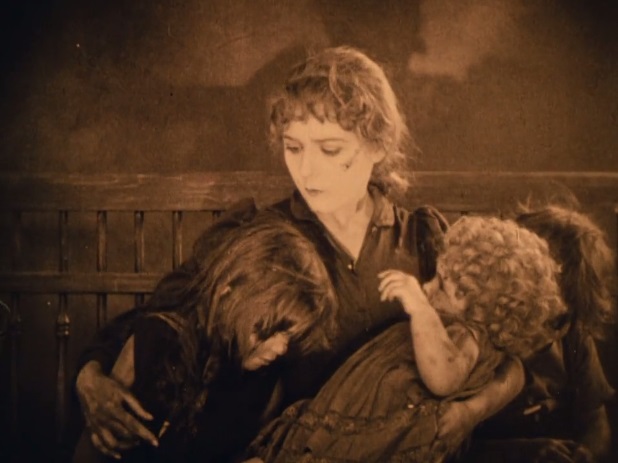
The film begins with images of a rustic house in the middle of the swamp, designed by the devil himself apparently, where we see Mr. Grimes (Gustav von Seyffertitz), cruel man that gets rid of a letter and a toy for an orphan. Then we see Molly (Pickford), the eldest of a group of orphans hosted in the midst of this arid land in charge of Grimes, who lives with his wife, Ms. Grimes (Charlotte Mineau), in a midden where all there is is hunger, diseases, where they pray and ask God to take them out of that ordeal. So goes life in that isolated site, the old tyrant even sells one of the children without thinking after being offered good price. Everything changes when a new baby arrives home-swamp, Doris, one baby who has been stolen from Dennis Wayne (Roy Stewart), wealthy individual who does not delay in giving his offspring search, initiating police investigations. The old Grimes at the beginning wants to get rid of the baby, but a reward is offered for the child, and as soon as he learns about that booty, tries to get that unexpected gain. Molly naturally does not allow the old fellow to put his hands on the child, and takes refuge in a barn. Everything will depend on the courageous Molly, who seeks a way out of that hell to all her companions and brothers, but she will find in the figure of Mr. Wayne a point of perfect escape to all lived ordeals.


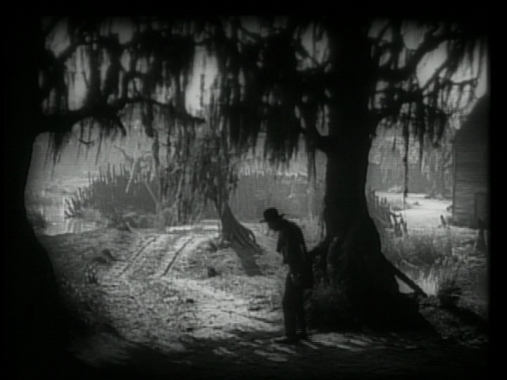
The beginning of the movie is powerful and eloquent, with a text on a sort of biblical passage, in which it talks about how the devil had his participation in the creation of the world, his contribution was to create a swamp, infernal masterpiece of terror, and God, observing such a good job, left it there. To that idea or concept, quite strong, adds the filmmaker as the next image of the infernal swamp mentioned, a large frame, a remarkable wide shot that shows almost like a map of that place as hell itself, we see two dilapidated houses, rustic constructions in the middle of wetlands, and swampy inhospitable site, which, exposed after what the original text informed, already is delineating what we are about to see. After generating the doubly eloquent beginning, the prologue continues, and tells us that the devil outdid himself carrying Mr. Grimes to that site. The figure, which seemed exaggerated, is then justified with equal forcefulness when we see the individual, reading a love letter from some family to a child, but he, far from being softened, wrinkles the sheet of paper, and throws the doll, a gift intended for the infant, to quicksand surrounding the swamp; his presentation is indeed infernal, is almost a demon what we see, cruel and heartless, unceremoniously disposes of loving personal effects. Very effective the presentation, the outline that makes us of one of the central characters of the film, a dastardly old man who starves children, even stealing babies, all for his own benefit, it is a demonic being, living in a demonic place, the swamp plagued by insanity and surrounded by quicksand. The scenario that director manages to portray is also remarkable, the way he prints this inhospitable, wild territory, is one of the strengths of the film, and we appreciate lush and powerful trees, impressive and at the level of the stage, dark unforgiving marsh, with mentioned quicksand as a perennial threat, an element that is omnipresent. Special mention to crocodiles, deadly reptiles that also appear in remarkable close-ups with all its intimidating presence, virtually interacting with interpreters -of course, this thanks to an efficient and commendable work of montage-, constituting much of the force that bounces that infernal location. All of this set a superb exercise of film shooted outdoors, such a Herculean task as proud are the results, a memorable film.


It is also a very significant work of visual storytelling, because for the time, and comparing with other contemporary exercises, a remarkable dynamism of the camera is deployed, we see a variety of very appreciable and enjoyable expressive resources. We observe, concatenated skillfully, close-ups, long shots, low-shots, high-shots, framings -such as the one opening the film- so strong and expressive, which lie in striking compositions in many cases. This is something that always, always, a great filmmaker manages to generate from the beginning, from its initial images, simply so is his film language, and so is the language of William Beaudine, this dynamism in his visual narrative, appreciating the vast majority of Yankee contemporary exercises, is certainly worthy of appreciation and valuation. This is quite notticeable when we consider the Hollywood context, because at that time, twenties, we spoke of a time when the Yankee film industry was becoming increasingly that, an industry, a business, and not an art. His great luminaries and emblems, led by David Wark Griffith, Mack Sennett as another great exponent, began a gradual artistic decline, the brightest filmmakers in Hollywood were not, paradoxically, Americans; shone on US soil Europeans migrating talents such as Erich von Stroheim, Josef von Sternberg, Paul Fiejos, Paul Leni, among other great talents. Beaudine is as a warm and valuable exception, when his countrymen cinema colleagues generated mass-produced films like commercial goods -without going any further, several of the biggest films of Pickford, which will be cited in subsequent lines, outshined mostly thanks to her interpretation, rather than cinematographic productions themselves-, the New Yorker is able to pleasantly surprise with this film; now, make no mistake, Beaudine in his very extensive filmography, among numerous short films and television episodes, not a few features with those guidelines surely produced, but this film is an enduring cornerstone which bears his imprint.


An interesting feature of the film is the striking variety of dramatic colors in its content, as more than one gender, or some feature of various genres we observe. The film surely does not lack comic dose, which collaborates the good performance of Pickford, but the merit in that paragraph is certainly for the filmmaker, who gets impregnated his film that warm comic halo. Naturally has a lot of drama the picture, properly balancing the touch of hilarity of certain sequences with all the power and strength of the drama presented of a mean old man who has many orphans in a hovel home, deceiving relatives, who believe that the old man takes care of them, but what he does is keep the money, only to have them all starving and suffering from disease; even steals babies, for ransom, it is thus an abject being. At this hodgepodge of drama and comedy, gets added perhaps the most obvious and  powerful guideline, religious guideline, since the movie is a kind of parable of Christian history, in which even see oneirically Molly interact with Jesus Christ. But there are also obvious allegories, after seeing Christ himself, we might see Moses in the figure of Molly, who takes not the Jews, but orphans, not out of Egypt, but the infernal Grimes house, leads them no through the desert, but the terrible and deadly swamp, to reach not the Red Sea, but other water concentration. As we can see, Beaudine gets to actually set a remarkable, varied, rich and at one time enriching film, is not difficult to understand the tremendous enthusiasm of a large figure as Ernst Lubitsch, who called the film "one of the eight wonders of the world". Exaggerated or not the assertion, we are definitely at an outstanding film, with not too many contemporary Yankee films that may make comparison. Filmmaker achieved, as said, to generate nice images, like the hands of orphans saying goodbye, through a cracked door, to the child who just sold Grimes, setting a tender picture, expressive and eloquent.


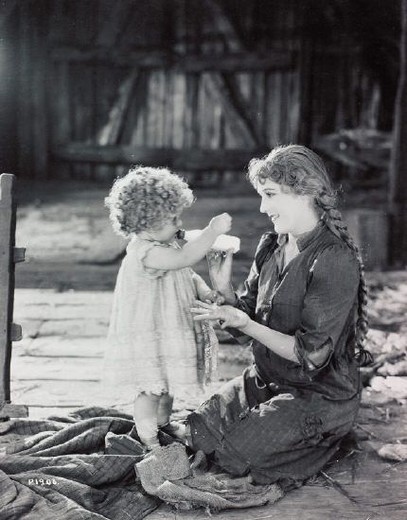
And there is obviously the maximum actoral asset, the Pickford, playing a role as generally were her characters, an immaculate, spotless and devout God female, and the latter detail in this film will be reinforced more than ever. It's like a superior mother, saving mother for all infants, even considering that basically she is one more of them, is one of the most beloved roles by the Canadian, matriarch who guides her children to salvation. Also, in a simile way as in other notable features starred by Mary, we will see the Canadian actress benefiting from her slight figure, his small stature, and we see the star, whom by the date counted 34 years, playing an orphan girl. With the help of the camera, and make-up course, without neglecting ever the smallness of the interpreter, is enabled such a feat, and the truth is that the results do not disappoint, something not strange to the connoisseur of the films of Pickford, because in Little Lord Fauntleroy (1921), directed by Alfred E. Green and her brother Jack Pickford, she even played a child; similarly, in Tess of the storm  country (1922) by John S. Robertson, albeit not an infant, also she plays a female character well below his actual age. That was the normal landscape of Hollywood then, Pickford, part of the United Artists founding-figures quartet, was certainly a shining star, was absolute master of most of her films, towering, adored by the public and the best paid too. Had equal or greater prominence and power that many Hollywood male interpreters, with Mabel Normand and Lillian Gish was among the greatest muses, and this film is just another sample of glittering actress. Excellent film, by one of the most prolific American filmmakers has ever been, not considered among the brightest, though, but in this case, leading one of Hollywood's greatest goddesses, articulates a timeless film, which for the connoisseur of silent cinema has many reasons to be considered necessary and essential.


domingo, 19 de junio de 2016

Tess of the Storm Country (1922) - John S. Robertson

John S. Robertson was an actor and director who enjoyed good reputation in the early decades of the twentieth century of the last millennium, when silent movies then was all that was known in the film art. Canadian-born filmmaker shot a lot of film exercises, worked during the transition from silent film to talkies, and led to some artistic luminaries then. It is the case of this film, which adapts the literary creation of Grace Miller White, and which has in its cast as acting first asset the mythical Mary Pickford, who was part of the founders of United Artists. The portrayed history presents the experiences of a wealthy family in US territory, whose patriarch built his house on top of a mountain, and lives bitter by a bunch of squatters who have settled at the foot of it, constantly trying to get rid of those people, for him undesirable individuals. Things get complicated when one of the occupants, beautiful and passionate young girl, gets emotionally attached to his eldest son, and even take care of the first born child of the sister of him, his grandson. The film is a good sample of the kind of pictures that were then made on American soil, decent and sober film, besides having in its cast the big female star of those days, essential Mary Pickford.


When the movie gets started, after a few Bible verses about respecting the neighbors, we see Elias Graves (David Torrence), having lunch with his children Frederick (Lloyd Hughes), Teola (Gloria Hope), besides the young Daniel 'Dan' Jordan (Robert Russell), her suitor. Elias lives upset by squatters living at the foot of the hill where his family resides; Dan, to please him, tries to get rid of them, along with Frederick, they both meet Tessibel 'Tess' Skinner (Pickford), small and stout girl, who puts them out of "her" land. Elias, owner of the land, requires all fishing nets are seized, and thus expel the invaders by hunger; while that is done, Teola urges Dan to marry. When Dan gives approval for the wedding, he is killed by Ben Letts (Jean Hersholt), invader who shoots him and blames Orn Skinner (Forrest Robinson), father of Tess. In the village the news spreads, Mr. Skinner is imprisoned, prosecuted without many hopes to return free, Tess suffers, while Frederick, who approached her, is attracted to the girl, the attraction is reciprocated, and he promises to look for her after finishing his studies. Letts, in the absence of the father, tries to marry Tess, and even attempts to rape her, but is stopped, while Teola, very affected, gives birth to Dan's child. Tess must take care for the poor baby, and hide her feelings for Frederick, but with a happy ending.


Just by starting the picture we see a personal dedication from the very Mary Pickford, in which, among other things, informs us, his audience, that Tess was her favorite interpreted character among all who she got incarnated, and at the end of film is not hard to imagine why. The central character of the film is delineated immediately when we appreciate barely a hint of personality, is presented to us eloquently when we see her braiding to death with poor Dan, take him to the ground and fill him with blows and kicks. Impossible not be surprised to see a petite female, flimsy-looking, beating a man who is much more tall than her (funny will see how the noble canid who saved her from a safe outrage, huge Great Dane, to stand on two legs and rebases her in size), attitude repeated many times during the feature; but is portrayed in her first action we see, do not hesitate and almost enjoys physical activity as unique, especially for a girl of his characteristics, because Dan is not the only one who tests her ardor in the first sequence. So we see the great Mary Pickford in her interpretation, in which even her walk is modified to generate the character of the fiery and rustic Tess, young lady of null manners and delicacy, chimeric hygiene habits, but immeasurable passion and kindness, characteristics outside the normal roles embodied by Pickford; maybe that's why, this being a distinct role, has been her favorite, being also the most challenging. Interesting is to appreciate the evolution of the character, the temperamental and almost wild girl from the start, to the noble and selfless young woman who takes care of the unfortunate orphan son of Dan. Certainly the whole acting burden is on her, it is indeed her film, was a test of character, and Pickford behaved at the height of his legend; whom was founder of United Artists, with her husband Douglas Fairbanks and immortal titans like David Wark Griffith and Charly Chaplin, becomes absolute protagonist of the film, her performance is strong, concise, compelling, it is easy to understand why by far she was the most beloved by the public at the stage of silent cinematic firmament, most dazzling cinema star then, and the best paid female star. It is worth mentioning that it was not her first time taking main role in a film, because a year earlier, in Little Lord Fauntleroy (1921), directed by Alfred E. Green and her brother Jack Pickford, took a similar responsibility. When the sound arrived to the seventh art, she adapted and incarnated more adult roles, something that viewers did not see with such good eyes. Anyway, she is undoubtedly one of the biggest female names of film scenario of those decades, and here we have a good justification for this assertion.


Robertson in his film proves to be a sober audiovisual narrator, obviously considering the resources and the availability of the time, a rather austerity in visual narrative is appreciated, where still shots dominate almost the entire film. The simplicity of his narrative is manifested in the absence of travellings, or following movements, in the absence of dynamism in the camera, a simple narrative language, sober, not glitzy or spectacular. This is however compensated by proper treatment of what is portrayed, no longer on the visual level but on the level of montage, structuring the story, and the plot, events, they feel properly connected; the jump of one sequence to another, from one moment to another, and the difference of sentiments contained therein, feels smooth, contrast generated when moving from one point to another (for example, after the death of Dan, immediately we see Teola, cheerful and preparing the invitations for a wedding that will never happen) gives greater strength to the story, increases the interest in the feature. But if something regrets who writes, is that scarce on the picture, and much, of close-ups, for the very proper performance of Pickford had been positively enhanced and reinforced with a proper of close-ups work, inundating the entire screen with her beautiful and expressive face; but again, the media and general still shots govern the film. That said, we can state that in fact is not the staging what stands out in the film, the main attributes are a solid story and even stronger performance of the protagonist, then already possessor of extensive filmography, abundant short films and not a few features integrated the career of the female acting celebrity. As initially said, this is a good example of average film made then in Hollywood, it is not a wonder as art cinema itself, but fulfills its purpose, attracts, entertains, is a decent entertainment, Hollywood film decline not yet begun; and thus, in defense of the filmmaker, we can say that this was the typical American cinema then, little deploy of true art. Without being mediocre pictures, are entertainment pictures, far from European cinema excercises, full of art in some cases; in USA, in that moment, interpreters used to shine more than directors. So we are presented with the story, the story of some unfortunate beings, victims of circumstances, noble beings some, low and contemptible other ones, such as Letts, and in the middle of all, she, the compendium of virtues, devotee of God, unblemished female, will find a happy ending in the arms of her lover. It was not surprising that the end of the picture is a happy ending, a happy corollary to all hardships and difficulties experienced, correct finishing touch for a film that although it is not near the great silent masterpieces, is a proper exercise with one of the greatest actresses of old American cinema. As a final detail, worth mentioning that this film is the second version of the story, the first was shot in 1914, also played by the Pickford. Filmic royalty.