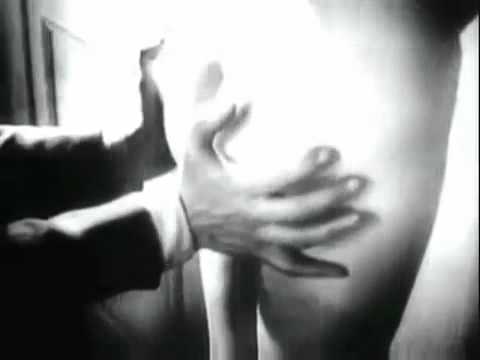
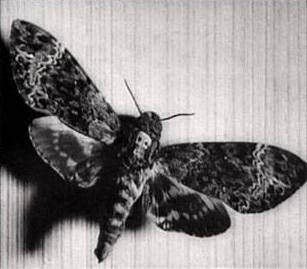
The film begins with images of the life of scorpions, their solitude and fierceness; after that, hours later, ecclesiastical men are on a riverside, facing this, an evildoer observes them, he will warn other evildoers of the presence of the religious men. They try to go and intercept the ecclesiastics, but they faint on the way. Then a large number of distinguished individuals arrive in boats, they are going to stage the Roman foundation, but are interrupted by a couple, a man (Gaston Modot) and a woman (Lya Lys) are wallowing in the mud, trying to have sex, and everybody, outraged, immediately stop them. Afterwards, the man is arrested and mobilized by police, in his way more than a wrongdoing performs, but is finally released from his custodians. Man and woman can not get out of each other's minds, and already free, having been appointed with high political office, he attends a meeting of bourgeoisie, where she is. There is the host, the Governor (Josep Llorens Artigas), where crazy circumstances occur, lovers are about to consummate their idyll, but again are interrupted, by a call of the Governor, who then commits suicide. After she kisses with an elder, appears the Duke of Blangis (Lionel Salem), of incredible resemblance to Christ, has performed unspeakable orgies in his castle, where he carries a wounded girl. The movie is over.


Inevitable to compare both films, and although it is executed differently as
A chien andalou, we observe a prelude sequence that serves as a proem, the scorpions and their existences, solitary, aggressive, lethal, arthropods with organisms divided into six segments, just like the movie. Buñuel does not waste time, his first sequences are already a declaration of intentions, since after the scorpions, the first thing we see are those ecclesiastics, the friars on a bank; but the figure is powerfully completed, for when "good men" go to see them, they find bones, bones under religious robes and mitres, bones that become dust: religion, the church, merges with death, in a powerful and eloquent surrealistic sequence. Religion is still a recurring theme in the filmmaker. Equally powerful and enunciative, equality of power in his statement has the following sequence, in which the lovers are first stopped, they are outlined as a singular couple, wallowing in the dirt, loving each other in the middle of the mud. And Buñuel goes further, when we see the woman, separated from her lover, without being able to remove him from her head, and the next image shown is a toilet, in addition to images of eruptions, apparently volcanic, that can be associated with the explosive and intense interrupted passion, but also resemble eschatological masses. We return with the man, who literally almost savored the filth, the mud on his face; it is thus a presentation as potent as the previous one, in which there is the description of the nature of that love, that passion, a passion unrelated to everything else, the famous
amour fou, crazy love, able to develop anywhere, even in unclean scenarios. Like the previous sequence, it is powerful what is portrayed, the paradox of love that develops in the dirt immediately talks to us of an insane love, at least for conventional eyes. From those representations, from those starting points, the rest of the feature is weaving. On a technical level, the film is as economical as its predecessor, or perhaps even more, not observing tricks or visual gadgets, only a few travellings and some dynamic shots when documenting the city of Rome. But nothing more, the overlayed shots and dissolutions of them, scarcely appearing in
A chien andalou, disappear now completely. One of the first and obvious differences, besides the most important ones, as we will see later, is that this picture is a talkie, it lags behind the muteness of Buñuel's debut, and we will hear soon dialogues between the evildoers of the beginning.


The film is completely surrealistic, but its surrealism applies in different way to the debut of Buñuel; now, with a film that almost triples the duration, surrealism is distended, is a surrealism a little less delirious, this partly because now comes the sound in the form of dialogues, taking away the mute hermeticism that had the first feature.
A chien...,
in its 17 minutes, it feels a more violent surrealism, more delusional in what is represented, it is like watching a dream, a 17-minutes-dream, where the reasoning is completely absent; now, with the dialogues, and with other subtle and not so few conventionalisms, naturally the rational appears much more. But be careful, this has a powerful causality. When Buñuel compared his first two films, his two most surrealist works, he tells us how
A chien andalou was a glimpse into the interior, full subconscious, without being linked at all with the outside. The most radical change in the present film is precisely the existence of that link, now it is no longer a look inside, it is no longer a total break with the outside, now seeks to denounce society, its failures and repressions, which end up by mutilating and subjugating the individual. And on the way to denouncing these evils, the film is linked to the exterior, the exterior interferes, that mixture of both worlds is what differentiates one feature from another, the famous conjunction of subconscious, Freud, and reality, Marx, liberation of the individual, of the worker from the enslaving society, the road that the surrealists approved. In this respect, the sequence of the meeting with the rotten bourgeoisie is vital, as portrayed in the flies that "live" in the face of the Governor, bourgeoisie at once absurd, with a fire that devours the servitude, but neither with that they get disturbed, in addition to a carriage pulled by an equine, that crosses the meeting without no one even being immutated; pure surrealism. Particularly amusing I found this sequence, with the bourgeois, so happy, so noisy, just like the aristocrats must have been in the house of the viscounts of Noailles, the financiers of the movie. Like the bourgeois of the film, the story tells that equally happy in their meeting were then the guests at the premiere of
The Golden Age, only to get outraged and enraged from the palace of Noailles, without uttering a word, after the first viewing of the film. By the way, if in
A chien andalou Paris and its context were shaped, now it is Rome the portrayed, the ancient imperial city, not immune to the frivolization, as we see in the detail of the garments and jewels, fashions promoted in the city.


All the main topics of the director continue to be reflected in the film, almost as echoes of
A chien...: love, passion, religion, repression, death, all the capital themes that later gradually would be developed and expanded in the later films of Aragonese. Among the symbolisms, the woman, sexually frustrated, finds in her bed a cow, who rests calmly and nonchalantly, representing her forced abstinence, her sexual frustration, cause she is powerless, filing her nails, thinking of her lover and her passion, in her
amour fou, a figure and a representation that later we would see in other films of Buñuel. That frustration continues in the following sequence, she looks out of the window at her lover, unattainable, then a quiet sky with clouds appears, contrasting that tranquility and passivity, the forced sexual passivity of her, with her desires. Of course, there is a sharp sexuality, lustful looks, lovers biting their lips, biting each other's fingers, but the erotic image par excellence is that of the girl sucking, sucking the bottom of a statue, a tremendously explicit image, specially for the time. Incredibly, the only time they are not interrupted, their sex drive stops abruptly at the sight of another statue's feet, a detail replete with surrealism. The difficulty of communication is also expressed warmly, the man, after being dragged for a long time by the police, unable to explain in words, shows a letter from the Governor, granting him a high position, he is released from the police. Curiously, the man is the receptacle of everything bad in the picture, the bad guy, kicking a little dog, killing an insect, beating a blind man for nothing, slapping one of the bourgeois women for spilling a drink over him. The protagonist, the supposed individual with whom we must empathize, is the most abject, contrasting with that idea, making it difficult for us to identify with him; but his cause remains "noble": consummate his love, his passion. The other issue, violence, in addition to what is described in previous lines, is crowned with a man who kills his son shoting him for throwing his cigar; also the duke, who commits suicide by throwing himself on the ceiling, an extremely dreamlike image. Another of the prowess of the film is to be one of the earliest French sound films, in addition to being a pioneer with the detail of the voice-over. Wagner will flow again as well,
Tristan and Isolde and their impossible love, when in the end the lovers are together, while she, disturbingly cries out "what joy, what joy to have killed our children!", and then we see the face of him, covered with blood; without doubt one of the most disturbing and attractive sequences of the film. Buñuel's bestiary also grows, after seeing his lover kissing with an old man, the man goes mad, again (as in
A chien...), while redoubled drums sound, throws out a burning pine, a friar, a plow and a giraffe. Very provocative is that the Duke of Blangis is identical to Jesus Christ, being Blangis the standard bearer of the orgiastic group, and then, after assisting one of the girls of his orgy, appears shaved, perhaps as a false and superficial redemption. Sade was one of the readings that more impacted Buñuel, and adapts with Blangis part of
The 120 days of Sodoma. A work of almost endless baggage and background, completes the surrealistic diptych of Buñuel,
The golden age is considered a cult film, necessary for the art film connoisseur.


 Barely a year after A chien andalou and all the impact that so irreverent work aroused, the most unbridled Buñuel returns to the plató, to continue concretizing the reference films of experimental cinema, the surrealist cinema that with the aforementioned movie had its official acceptance in the intellectual world of then. As in the first film, the Aragonese filmmaker collaborates with his great comrade, friend and surrealist colleague, Salvador Dalí, nevertheless, this time his collaboration is not so recognized by the filmmaker. Although this film extends up to sixty minutes, far exceeding the length of just under twenty minutes of its predecessor, it shares with it its surrealistic guideline, its conception as a work that separates itself from reality, from the plane of real space and time, a world of dreams, subconscious, repression and sexual impulses, but this time more than a novelty we will find. Buñuel structures his story in six segments, in which we will appreciate the story of a couple, a man and a woman who desire each other intensely, a carnal desire that will be repeatedly truncated by various agents of society, their relatives, religious authorities, or bourgeois, while the most unlikely circumstances keep happening. Another reference film of the giant Spanish filmmaker, another cult film in the art cinema, experimental cinema.


 Inevitable to compare both films, and although it is executed differently as A chien andalou, we observe a prelude sequence that serves as a proem, the scorpions and their existences, solitary, aggressive, lethal, arthropods with organisms divided into six segments, just like the movie. Buñuel does not waste time, his first sequences are already a declaration of intentions, since after the scorpions, the first thing we see are those ecclesiastics, the friars on a bank; but the figure is powerfully completed, for when "good men" go to see them, they find bones, bones under religious robes and mitres, bones that become dust: religion, the church, merges with death, in a powerful and eloquent surrealistic sequence. Religion is still a recurring theme in the filmmaker. Equally powerful and enunciative, equality of power in his statement has the following sequence, in which the lovers are first stopped, they are outlined as a singular couple, wallowing in the dirt, loving each other in the middle of the mud. And Buñuel goes further, when we see the woman, separated from her lover, without being able to remove him from her head, and the next image shown is a toilet, in addition to images of eruptions, apparently volcanic, that can be associated with the explosive and intense interrupted passion, but also resemble eschatological masses. We return with the man, who literally almost savored the filth, the mud on his face; it is thus a presentation as potent as the previous one, in which there is the description of the nature of that love, that passion, a passion unrelated to everything else, the famous amour fou, crazy love, able to develop anywhere, even in unclean scenarios. Like the previous sequence, it is powerful what is portrayed, the paradox of love that develops in the dirt immediately talks to us of an insane love, at least for conventional eyes. From those representations, from those starting points, the rest of the feature is weaving. On a technical level, the film is as economical as its predecessor, or perhaps even more, not observing tricks or visual gadgets, only a few travellings and some dynamic shots when documenting the city of Rome. But nothing more, the overlayed shots and dissolutions of them, scarcely appearing in A chien andalou, disappear now completely. One of the first and obvious differences, besides the most important ones, as we will see later, is that this picture is a talkie, it lags behind the muteness of Buñuel's debut, and we will hear soon dialogues between the evildoers of the beginning.


 The film is completely surrealistic, but its surrealism applies in different way to the debut of Buñuel; now, with a film that almost triples the duration, surrealism is distended, is a surrealism a little less delirious, this partly because now comes the sound in the form of dialogues, taking away the mute hermeticism that had the first feature. A chien..., in its 17 minutes, it feels a more violent surrealism, more delusional in what is represented, it is like watching a dream, a 17-minutes-dream, where the reasoning is completely absent; now, with the dialogues, and with other subtle and not so few conventionalisms, naturally the rational appears much more. But be careful, this has a powerful causality. When Buñuel compared his first two films, his two most surrealist works, he tells us how A chien andalou was a glimpse into the interior, full subconscious, without being linked at all with the outside. The most radical change in the present film is precisely the existence of that link, now it is no longer a look inside, it is no longer a total break with the outside, now seeks to denounce society, its failures and repressions, which end up by mutilating and subjugating the individual. And on the way to denouncing these evils, the film is linked to the exterior, the exterior interferes, that mixture of both worlds is what differentiates one feature from another, the famous conjunction of subconscious, Freud, and reality, Marx, liberation of the individual, of the worker from the enslaving society, the road that the surrealists approved. In this respect, the sequence of the meeting with the rotten bourgeoisie is vital, as portrayed in the flies that "live" in the face of the Governor, bourgeoisie at once absurd, with a fire that devours the servitude, but neither with that they get disturbed, in addition to a carriage pulled by an equine, that crosses the meeting without no one even being immutated; pure surrealism. Particularly amusing I found this sequence, with the bourgeois, so happy, so noisy, just like the aristocrats must have been in the house of the viscounts of Noailles, the financiers of the movie. Like the bourgeois of the film, the story tells that equally happy in their meeting were then the guests at the premiere of The Golden Age, only to get outraged and enraged from the palace of Noailles, without uttering a word, after the first viewing of the film. By the way, if in A chien andalou Paris and its context were shaped, now it is Rome the portrayed, the ancient imperial city, not immune to the frivolization, as we see in the detail of the garments and jewels, fashions promoted in the city.